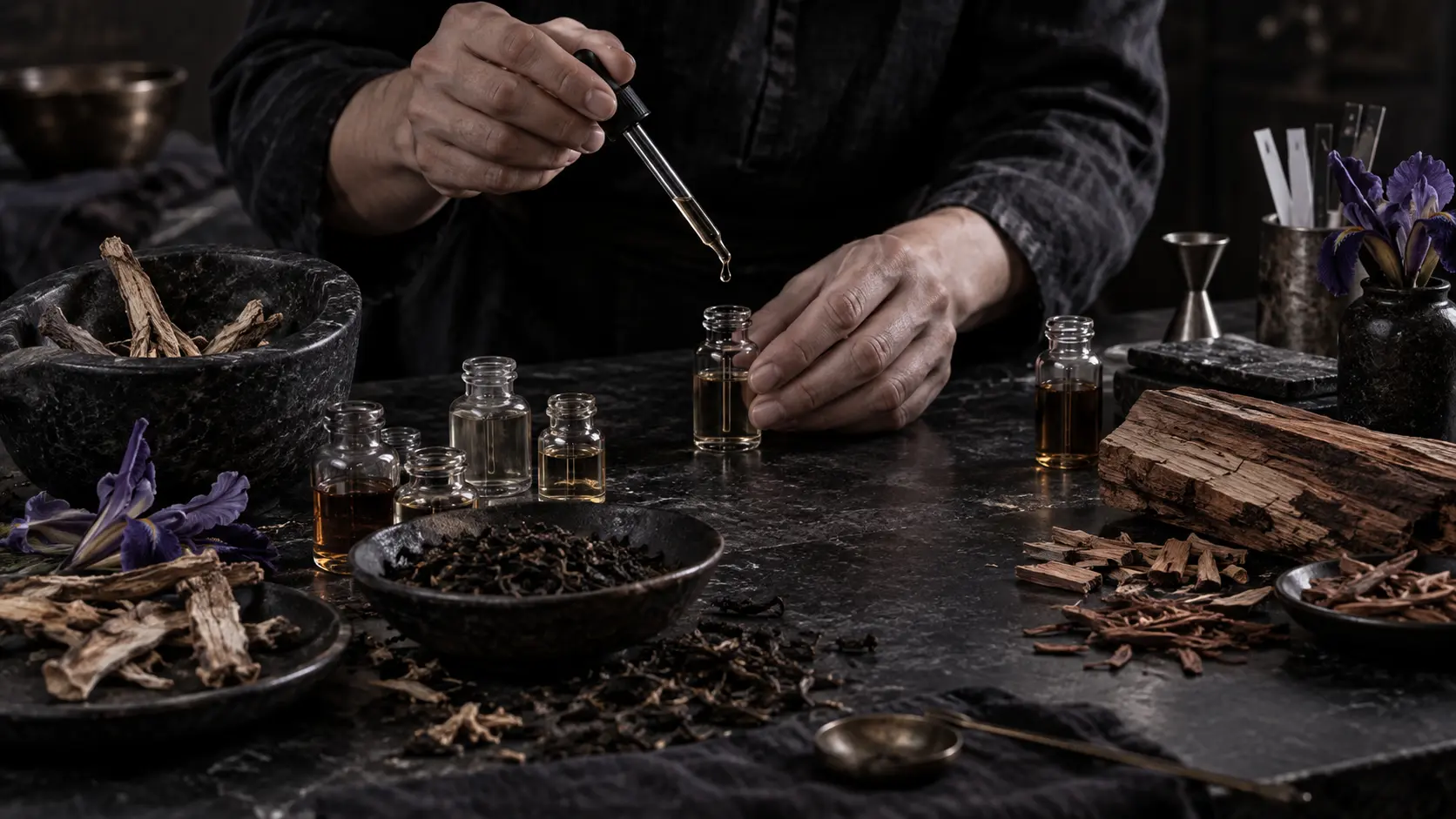
Few perfume materials ask us to wait as long as orris. The iris is grown not for its flower, but for the quiet rhizome beneath the soil. After harvest, the root is cleaned, cut and left to dry for years before its scent truly arrives.
Fresh iris root smells almost of nothing. Time performs the essential work, slowly creating the molecules that give orris its impossible character: violet and earth, powder and cold skin, a cellar and a page.
A material of distance
Orris never feels fully present. It seems to arrive from another room, softened by walls and years. This quality makes it less a floral note than a device for memory. It places distance inside a formula.
In After Rain, we use orris butter not to suggest a bouquet, but damp plaster, wet wool and the pale dust that rises when an old book is opened.
Patience in the formula
Its production is costly because time cannot be compressed. The roots mature in earth, then again in darkness. Their yield is small. Every gram contains years of weather and storage.
That slowness teaches an important lesson: perfume is not only made at the moment of blending. It begins far earlier, in soil, weather, labor and restraint.
The trace left behind
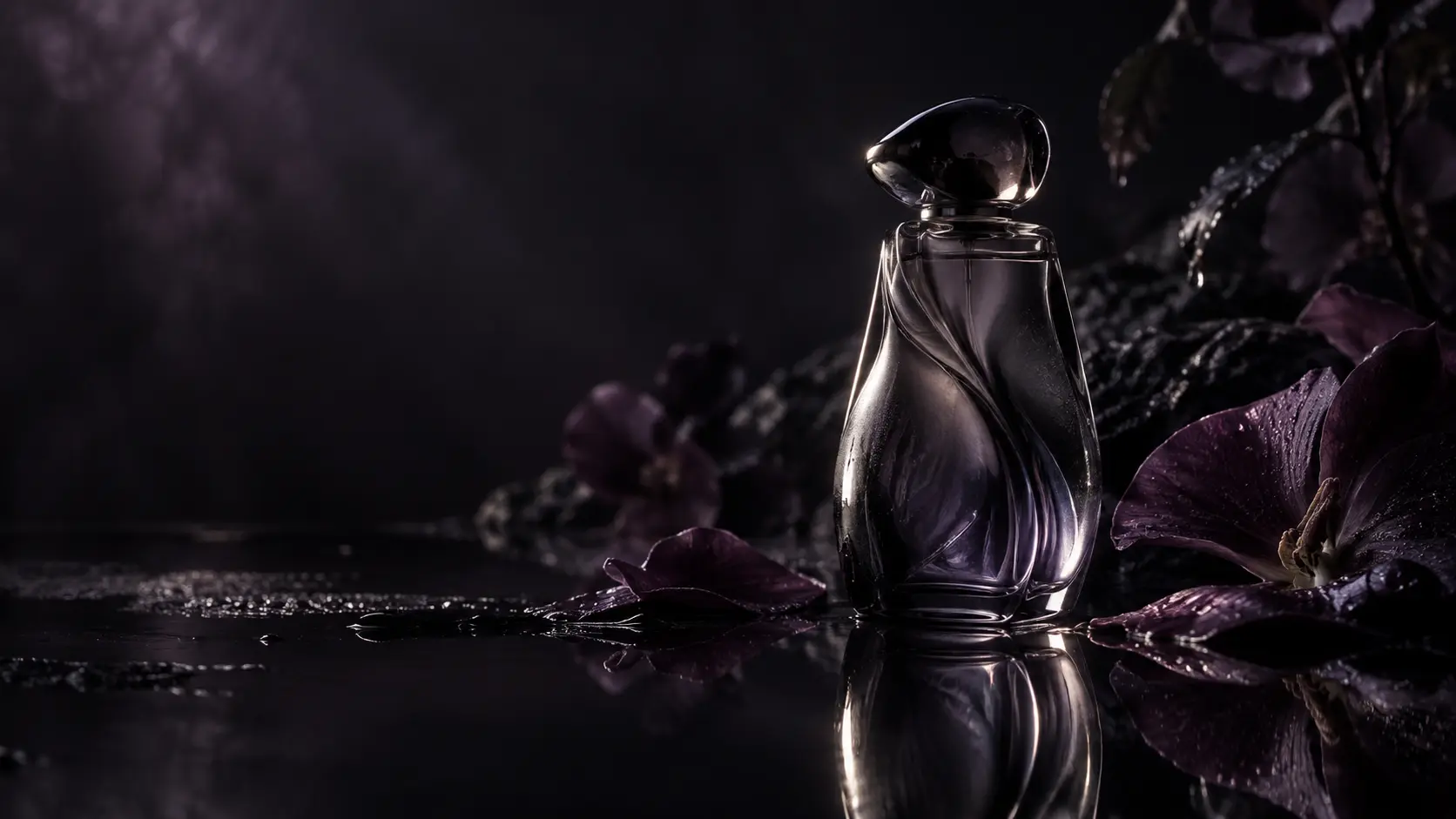
On skin, orris often outlives louder materials. Its presence is quiet but structural, holding the composition together after the opening has vanished. You may stop smelling it directly and still feel the space it creates.
Perhaps that is why it resembles memory so closely. What remains is not the event itself, but the shape it left behind.